
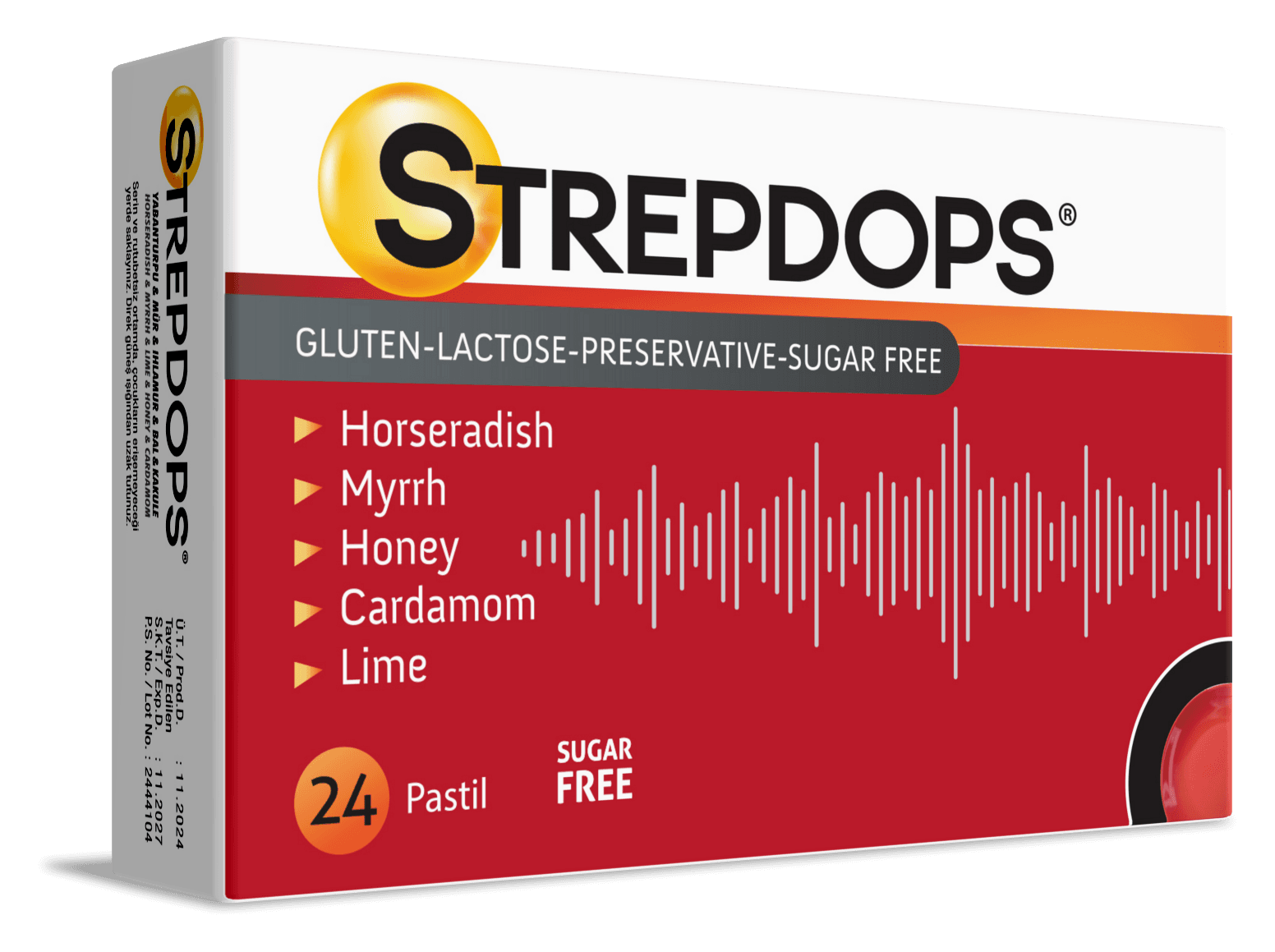
STREPDOPS
Voice Care Lozenges
Iceland moss, marshmallow and sage with hyaluronic acid, zinc and vitamin C.
ExploreCommon reasons hoarseness can occur, and general information on supporting voice comfort in daily life.
MESA Health Guide Team

Hoarseness is when the voice sounds rougher, cracked, or weaker than usual. It is most often a temporary condition, typically linked to temporary irritation of the vocal cords.
Resting the voice as much as possible, speaking at a normal but soft volume rather than whispering, drinking plenty of water, and keeping the air humid are general habits that can help support voice comfort during hoarseness.
Hoarseness usually clears up on its own within one to two weeks. If it lasts longer than two weeks, keeps recurring, or has no clear cause — especially if you use your voice intensively for work — consulting an ear, nose and throat specialist is recommended.
This content is for general informational purposes only, is not medical advice, and does not replace the guidance of a healthcare professional.
You can ask your pharmacist about this product.

Common reasons a sore throat can occur, and general information on supporting throat comfort in daily life.
Read More
General suggestions to keep in mind for throat and voice comfort on days when your voice is used intensively.
Read More
General information on the role throat lozenges can play in a daily routine, and what to consider when choosing one.
Read More